Swords · Five · Air
Five of Swords
- conflict
- hollow victory
- tension
- walking away
A fight won at too high a cost; the card asks whether being right is worth what it takes.
Upright
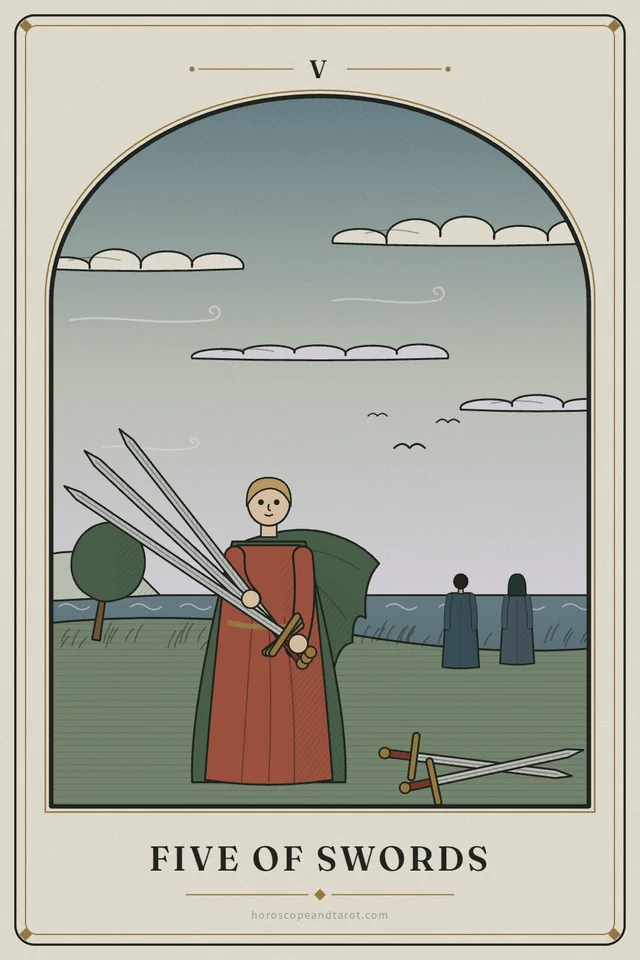
The Five of Swords is a card of conflict and its aftermath. Fives often mark disruption in tarot, and in Swords that disruption is a clash of words or wills. Traditionally it shows a smug figure gathering swords while two others walk away defeated. It signals hostility, unfair tactics, hollow victories and the strain that follows an argument.
In everyday life, this card might reflect a disagreement where someone won the point but damaged the relationship, a workplace dispute that left everyone tired, or a moment when you felt outmaneuvered. It asks you to look at the cost. Winning by any means can leave you alone with a pile of swords. Sometimes the wiser move is to concede gracefully, apologize, or walk away from a fight that isn’t worth having. If you’re the one who lost, the card suggests you can step back and choose not to keep playing.
Reversed
Our draws are upright-only by default; some readers use reversals as a quieter, inward or blocked version of the card.
Reversed, the Five of Swords suggests a desire to make peace after conflict, or lingering resentment that hasn’t been resolved. You may be ready to apologize or let something go, or still be replaying an argument. Decide which battles truly matter. Reaching out to repair, or simply letting the matter rest, often brings more relief than winning.
Five of Swords in love
Arguments where someone wins but the relationship loses. Ask whether being right is worth it.
Reversed in love: Making peace after a fight, or walking away from a contest that can’t be won.
Draw it in a love tarot reading: you, them and the connection.
Is Five of Swords a yes or no card?
No The Five of Swords wins at a cost. Not worth it as things stand. Reversed, it reads no.
Ask your own question in a yes or no tarot reading.
In a three-card spread
- What to notice
- Notice where conflict has left tension, resentment or a hollow sense of victory.
- What to release
- Release the need to win at the expense of relationships.
- What to practice
- Practice choosing your battles and repairing after disagreements.
Symbolism
The Five of Swords traditionally shows a figure in the foreground holding three swords and glancing with a slight smirk at two figures walking away toward the water, heads bowed. Two more swords lie on the ground, and jagged clouds cross the sky. Themes include defeat, dishonor, conflict, self-interest and the bitter taste of winning unfairly.