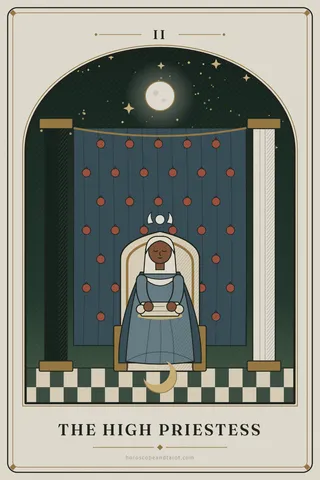
In mythology, the moon usually stands for change, timing, memory, and the hidden side of life. It is often tied to goddesses and gods of night, birth, death, hunting, tides, love, or prophecy, depending on the culture.
That broad meaning comes from how the lunar cycle works in plain sight. The moon appears, grows, fades, and returns in about 29.5 days, so people have long used it as a symbol for rhythm, mystery, and things that are not fully known.
Why ancient stories gave the moon such a large job
People did not need a telescope to notice that the moon changes shape on a schedule. That steady change made it a natural symbol for time passing, renewal, and the fact that life rarely stays fixed. It also showed up at night, when seeing clearly is harder and imagination gets louder.
Myths often use celestial bodies to explain what people can observe but not control. The lunar figure might be a watchful deity, a silver guide through darkness, or a force that affects tides, planting, sleep, or the calendar. If you want a clean overview of the sky side of this topic, the Moon's phases, explained is a useful place to start.
In many traditions, the moon is linked with the feminine, but that is not universal. Some cultures cast it as male, some as female, and some as both or neither. The important thing is the pattern, the cycle, and the sense that something hidden is still active even when it is hard to see.
What the moon often stands for in myths
A few meanings show up again and again. First is change, because the lunar face is never exactly the same for long. Second is reflection, since it does not make its own light but returns sunlight in a softer form. Third is secret knowledge, because night stories tend to favor what is concealed, remembered, or guessed at rather than shouted out.
You also get symbols of fertility, sleep, intuition, and the passage between worlds. In some myths, the moon is a gatekeeper for souls, dreams, or prophecy. In others, it is a keeper of calendars and crops, which is less poetic but very practical.
This is why the moon can feel both gentle and severe in old stories. It can guide travelers, mark months, and govern ritual timing, but it can also represent distance, loss, and the fact that no season lasts forever. For a broader view of its symbolic life, read what the moon symbolizes.
Goddesses, gods, and the moon's many faces
The moon goddess is one of the best known mythic figures, but not the only one. Greek, Roman, Egyptian, Chinese, Japanese, Norse, Hindu, and many other traditions include lunar beings, each shaped by local values and stories. Some are protectors, some are hunters, some govern childbirth, and some are simply luminous officials of the night.
A useful caution: do not assume every lunar figure is a copy of the same idea. A moon deity can be associated with virginity, marriage, magic, madness, wisdom, or timekeeping, depending on the culture. If you want a concise discussion of the title itself, what the moon goddess is called gives the naming side of the picture.
There is also the familiar folk image of the man in the moon, which turns the lunar surface into a face or figure. That image appears in many places and serves different purposes, from a moral tale to a simple way of explaining shadows and craters. For that story, the man in the moon is the better next stop.
Animals, objects, and signs attached to lunar stories
Myths do not stop at deities. The moon is often paired with animals such as rabbits, wolves, deer, owls, or frogs, especially when a culture links night vision, fertility, or seasonal change to animal life. A rabbit on the lunar surface, for example, is a common motif in East Asian storytelling and is not the same as the man in the moon tradition.
Other symbols include mirrors, silver, water, pearls, and gates. These objects suit a body that reflects light, shapes tides, and appears to move across the sky with eerie patience. Even moon dogs, halos, and earthshine have inspired lore because unusual night sights are catnip for story making.
If you enjoy the practical side of these signs and patterns, the site has plain guides on the science too. Moonlight explains how the light works, and the moon's orbit around Earth covers the motion that makes the mythic cycle possible. The facts are not less interesting for being real.
How the lunar cycle shaped calendars and ritual
Long before clocks were common, people used the moon to count time. A synodic month, the time from one new moon to the next, is about 29.5 days, which made the lunar cycle useful for marking feast days, planting, fasting, and worship. That is one reason lunar imagery is so often linked with order, return, and sacred timing.
Full moon names come from several traditions, mostly North American almanac sources, and they are best treated as folk names rather than a single ancient system. Different communities used different labels for seasonal changes, crops, animals, and weather. If you want the history and variety in one place, full moon folklore and full moon names by month are both worth a look.
Modern moon talk still borrows from those old habits. A supermoon is a full moon near perigee, so it appears a bit larger and brighter than average, and eclipses require a full or new moon near a lunar node. For the calendar side of the story, tonight's moon phase and upcoming full moons keep the practical details close at hand.
How to read the symbol without getting lost in mysticism
The safest way to read the moon in mythology is to ask what job it is doing in the story. Is it marking time, hiding truth, guiding the dead, protecting travelers, or governing crops and tides. That function tells you more than a generic label ever will.
A common mistake is to assume every lunar myth means the same thing everywhere. It does not. One culture may connect the moon with fertility, another with war, another with wisdom, and another with the boundary between the living and the dead. The symbol keeps its shape, but the meaning changes with the story around it.
If you like using symbolic systems as reflection rather than prediction, the comparison to tarot is handy. The Moon card in tarot points to uncertainty, dreams, and things half-seen, which is close to many mythic uses of the lunar body. You can read The Moon card meaning or explore the tarot if that sort of symbolism is your thing.
Questions readers ask
Does the moon always mean femininity in mythology?
No. Many cultures connect the moon with goddesses, but many others use a male or mixed figure. The stronger pattern is not gender alone, it is change, rhythm, and hidden knowledge.
Why do so many myths link the moon to madness or sleep?
Because the night changes how people feel and behave, and because the lunar cycle was easy to notice long before modern lighting. The connection is symbolic, not proof of a direct cause. A myth can reflect human unease without being a medical claim.
Are full moon names ancient and universal?
No. Full moon names come from several traditions, mostly North American almanac sources, and they vary by place and community. They are useful folk labels, but they are not one single global system.
Is the moon's mythic meaning the same as its scientific meaning?
Not exactly. Science explains what the moon is and how it moves, while mythology explains how people have interpreted it. The two can sit side by side without competing, as long as you keep the categories separate.
Drafted with AI assistance from Horoscope & Tarot’s own reference notes and checked automatically against our editorial rules. For reflection and entertainment, not prediction.

