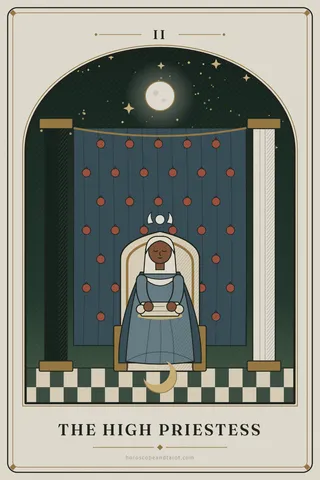
A half moon is the quarter phase, not a moon that is literally cut in half. You are seeing one side of the lunar disk lit by the Sun, while the rest stays dark from your point of view. In practical terms, this phase marks a right-angle moment in the monthly cycle, halfway between new and full, or full and new.
People often use the phrase loosely, but the exact meaning depends on context. Astronomically, it is a quarter phase. In symbolism and everyday reading, it can stand for balance, decision points, and the need to work with a clear split between two options. If you want the broader cycle, the moon phases explained page is a useful next stop.
What the phase actually is
The phrase half moon is common, but skywatchers usually call it first quarter or last quarter. Those names refer to where the body sits in its orbit, not how much of it looks bright. A synodic month, the cycle from one new phase to the next, lasts about 29.5 days, so this point comes roughly a week after the new phase and about a week before full.
At this stage, exactly half of the visible disk is illuminated. The term quarter can be confusing because it describes the orbital position, not the amount of light you see. That is why the everyday name and the technical name do not line up neatly.
If you like keeping track of the sky from home, tonight’s moon phase gives you the current phase in plain language. For the full cycle laid out step by step, moon phases in order is the cleanest reference on the site.
What it can mean symbolically
In symbolic reading, this phase often points to balance, choice, and a clean split between two paths. It is the point where one half of a cycle has been built and the other half is still ahead. That makes it a good image for weighing options, making a practical call, or noticing where you need more information before acting.
The symbolism is not mystical proof and it is not a guarantee of what will happen. It is a tool for reflection. You can use it the way you might use a checklist, a journal prompt, or a good old-fashioned calendar note.
Because the light is divided, people sometimes read it as a moment to compare what is visible with what is hidden. That can be useful when you are deciding between two jobs, two plans, or two ways of saying the same thing. If you want a reflective companion piece, moon journal prompts for self reflection has a few prompts that fit this phase well.
First quarter and last quarter are not the same
First quarter and last quarter both look like half moons, but they sit on different sides of the cycle. First quarter comes after the new phase and before full. Last quarter comes after full and before the thin crescent that leads back to new.
The difference matters if you are reading the phase for timing. First quarter is about building, adjusting, and pushing through the first set of obstacles. Last quarter is about sorting, simplifying, and letting go of what no longer helps. Same shape, different job.
A plain way to remember it is this, first quarter tends to ask what needs doing next, while last quarter asks what can be trimmed away. That is a far better use of the term than treating it like a generic symbol for “half and half.” If you want the details, first quarter and last quarter explain the difference clearly.
How to read it in everyday life
You do not need a horoscope chart to use this phase well. Start with one concrete question, then ask where you stand between two poles. For example, are you between starting and finishing, saving and spending, speaking and waiting, or keeping and releasing? The phase works best when you attach it to a real choice.
Here is a simple made-up example. Maya, born on March 18, notices that her project is stalled because she keeps polishing the opening instead of finishing the middle. She uses the quarter phase as a reminder to stop tweaking the first part and move the task forward. That is the right sort of use, practical and limited, not magical certainty.
If you want more structure, pair the observation with a tool from the site. A quick free birth chart calculator can add context if you are comparing the phase to your own chart, and the twelve zodiac signs page can help if you are learning how different signs tend to handle tension and choice.
What people often get wrong
One common mistake is assuming a half moon means a halfway point in brightness rather than a specific position in the cycle. Another is assuming every half moon means the same thing in a symbolic reading. The phase is consistent, but the question you bring to it changes the interpretation.
Another error is confusing astronomy with folklore. A half phase is a real, observable part of the cycle, but any deeper meaning is a matter of tradition, personal reflection, or entertainment. That is fine, as long as you keep the categories separate.
People also mix up the quarter phase with special events like eclipses or supermoons. Eclipses happen only near a new or full phase, when the body is close to a lunar node. A supermoon is a full phase near perigee, when it is a bit closer to Earth than average. For a broader factual guide, the free tools page is a handy hub, and what is a supermoon clears up that distinction.
How it fits into the larger lunar cycle
The quarter phase is one checkpoint in a repeating cycle, not a stand-alone event. After new comes the first crescent, then the quarter phase, then gibbous, then full, and then the sequence reverses. That pattern is steady enough to follow by eye once you have seen it a few times.
If you watch the phase night after night, the shape changes in a predictable way. The lit portion grows, peaks, and shrinks in a rhythm that has long made calendars and folk traditions easier to track. That is why many almanac-style names and customs grew around it, especially for the full phase, which has a wider set of traditional names from several sources, mostly North American almanac traditions.
If you enjoy that older style of skykeeping, full moon folklore gives the background without overdoing the mythology. For a simple visual companion to the cycle, waxing vs waning moon helps you tell which side of the split is growing and which is fading.
Questions readers ask
Is a half moon the same as a quarter moon?
Yes, in standard skywatching language it is usually the same thing. Half moon is the everyday phrase, while first quarter and last quarter are the more exact terms. The names sound different because one describes what you see and the other describes where it sits in its cycle.
Why does a half moon look like it has two sides?
Because one side is lit by the Sun and the other is dark from your viewpoint. That split is an effect of angle, not a special property of the surface. The body itself is still spherical, and the lighted portion changes as it moves.
Does a half moon mean anything for mood or behavior?
People often use it as a prompt for reflection, but there is no solid proof that this phase controls mood or behavior. Some people notice personal patterns, while others do not. The safest way to use it is as a reflective cue, not a forecast.
How can I tell if I am seeing first quarter or last quarter?
Look at the growing or shrinking shape around it. If the lighted part is increasing after new, it is first quarter. If the lighted part is decreasing after full, it is last quarter.
Drafted with AI assistance from Horoscope & Tarot’s own reference notes and checked automatically against our editorial rules. For reflection and entertainment, not prediction.