A new moon ritual is a short, deliberate pause on the night the Moon goes dark: you clear a small space, write down one thing you want to begin, and choose a first step you can take this week. It needs a pen, a piece of paper and about twenty minutes. Candles, crystals and incense are optional extras, not requirements.
The appeal is the timing. The new moon starts the lunar cycle, a natural page one that comes around roughly once a month, and many people find it easier to begin something when the calendar offers a clean edge. What follows is a version you can do at a kitchen table, plus ways to adapt it.
What the new moon actually is
At new moon, the Moon sits roughly between Earth and the Sun. The half lit by the Sun faces away from us, so from the ground there is nothing to see. A day or two later a thin crescent appears low in the west after sunset, and the Moon begins to wax. The whole cycle, from one new moon to the next, takes about 29.5 days. You can check tonight's moon phase whenever you like.
Some people distinguish the dark moon, the last stretch of darkness before the new moon, from the new moon itself and from that first visible crescent. Our guide to the dark moon versus the new moon explains how the terms are used. For exact dates and the sign each one falls in, see the upcoming new moon dates rather than guessing.
In astrology, the new moon always falls in the same sign as the Sun, because the two are lined up. Astrologers treat it as a seed moment, associated with starting rather than finishing. That is a symbolic reading, not a force acting on you, and it is useful exactly to the extent that it gets you thinking clearly about what you want next.
Before you begin
- A quiet surface. A desk, a windowsill, the end of the bed. Clear it of everything else.
- Paper and a pen. Handwriting slows you down, which is the point.
- Optional light. One candle or a small lamp. If you use a candle, put it in a sturdy holder away from curtains, papers and pets, and never leave it burning when you step out of the room.
- Twenty minutes with your phone somewhere else.
A 20-minute new moon ritual, step by step
- Settle (2 minutes). Sit down, put both feet on the floor and take a few slow breaths. If you're lighting a candle, do it now, as a signal that this time is set apart.
- Look back briefly (3 minutes). Write two or three lines about the past month. What took up your attention? What do you want less of? Don't analyze; just list.
- Name what you want to begin (5 minutes). Write freely about what you would like the next few weeks to hold: a habit, a project, a conversation, a different way of spending evenings. Let it be messy.
- Choose one intention (3 minutes). Circle the item that matters most and rewrite it as a single present-tense sentence: "I spend Sunday mornings on the novel," or "I answer messages twice a day, not all day."
- Pick the first step (3 minutes). What could you do in the next three days that proves the intention is real? Make it small and specific: buy the notebook, book the appointment, set the alarm.
- Mark the close (2 minutes). Read the intention aloud once. Fold the paper and put it where you will see it, inside your planner or under the candle holder. Snuff or blow out the candle.
- Put it in the calendar (2 minutes). Schedule the first step and a check-in two weeks out, which lands near the full moon.
That is the whole ritual. The calendar step matters more than it looks: an intention with a date attached tends to survive the week, and one without tends to dissolve by Wednesday.
What to write on the night
If step three leaves you staring at a blank page, try one of these:
- What do I keep saying I'll start "when things calm down"?
- What would I like to be true by the next new moon?
- Which small habit would make the biggest difference to an ordinary weekday?
- What am I ready to try badly before I can do it well?
- Who would I like to see more of, and what would that take?
Keep the intention within your own control. "I apply for two jobs a week" is something you can do; "I get the job" depends on other people. The first kind gives you something to act on. For more on phrasing, see how to set intentions that hold up past the first few days.
Matching the intention to the new moon's sign
Each new moon falls in one of the twelve signs, and many astrologers suggest matching your intention to that sign's themes. You don't have to, but it can be a helpful nudge when you're unsure where to focus:
- Fire signs (Aries, Leo, Sagittarius): starting something bold, creative work, travel or study.
- Earth signs (Taurus, Virgo, Capricorn): money, routines, health habits, long projects.
- Air signs (Gemini, Libra, Aquarius): conversations, writing, partnerships, community.
- Water signs (Cancer, Scorpio, Pisces): home, feelings, rest, honesty with yourself.
Treat these as suggestions, not instructions. If the new moon is in Gemini and what you really need is a savings plan, write the savings plan.
Adding a card or a stone
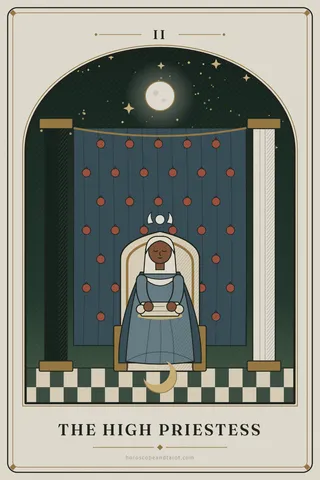
Some people like to draw a single tarot card after writing the intention, as a second angle on it. Ask something open, such as "What will help this grow?", and read the card as a prompt rather than a verdict. The High Priestess, the card traditionally linked with the Moon, is a fitting image to keep on the table if you have a deck. Our moon tarot spreads include a short new moon layout.
A crystal can serve the same purpose: something to hold while you think, or a small object on the desk that brings the intention back to mind. It's a focus aid and nothing more.
If you can't do it on the exact night
Life doesn't rearrange itself around the lunar calendar. Many practitioners consider the day or two after the new moon just as suitable, and some prefer to wait for the first crescent. What matters is the pause, not the timestamp. If you miss the window entirely, do the ritual anyway and note the date. Two weeks later, a full moon ritual is a natural point to review how the intention is going.
Questions readers ask
Do I need candles or crystals for a new moon ritual?
No. The working parts of the ritual are the writing, the single intention and the first step on your calendar. Candles and stones are there for atmosphere and focus if you enjoy them. If you live with pets or small children, a lamp does the same job without the risk.
What should I avoid during a new moon?
There are no rules that apply to everyone. Some traditions treat the dark moon as a time for rest rather than action, so you might keep that particular evening light. Practically, avoid setting ten intentions at once, which usually means none of them get done.
Can I do a new moon ritual with friends?
Yes. A small group can each write privately, then share one intention and one first step aloud. Saying it to other people can make it easier to follow through, and you can check in with each other at the full moon.
How long until I see results?
A ritual doesn't produce results on its own; your actions do. Give the first step a few days and the intention a full cycle of about a month, then review it honestly at the next new moon and adjust.
