Wands · Ten · Fire
Ten of Wands
- burden
- responsibility
- overcommitment
- effort
Carrying too much at once; the weight of obligations that may need sharing or setting down.
Upright
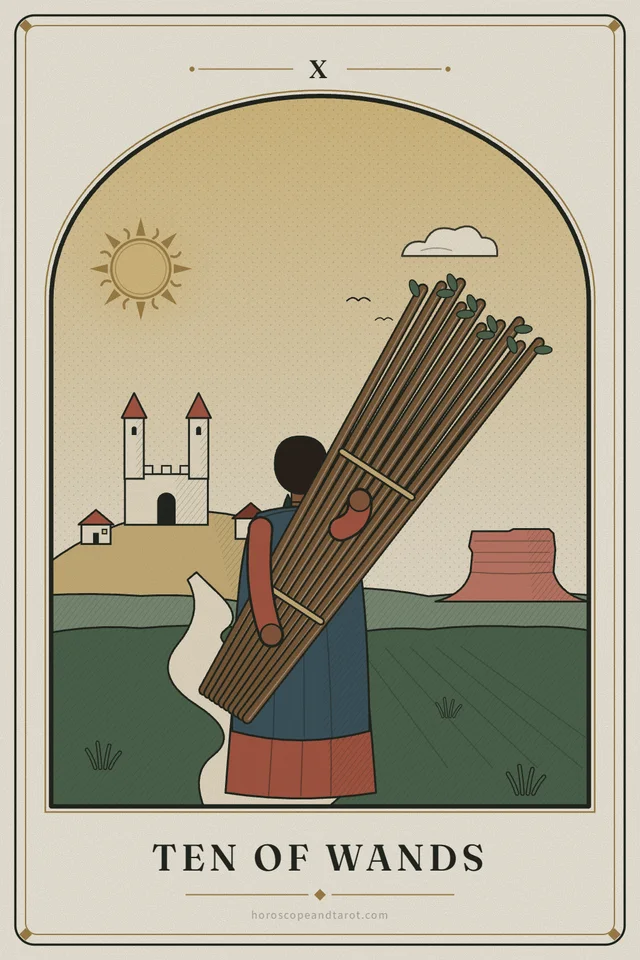
The Ten of Wands closes the suit’s fiery cycle, and tens in tarot often mark completion or excess. Here it’s excess: too much energy turned into too many responsibilities. Traditionally the card shows someone straining under a bundle of wands, so loaded they can barely see where they’re going. It signals burden, overcommitment and hard work near its limit.
In practical terms, this card often appears when your calendar is too full, you’ve said yes to everything, or you’ve taken on tasks that belong to someone else. You may be close to the finish, but the load makes every step harder. The card asks you to look at what you’re carrying and why. Which tasks are actually yours? What could be delegated, postponed or dropped? Success isn’t measured by how much weight you can hold. Lighten the bundle and you’ll see the path again.
Reversed
Our draws are upright-only by default; some readers use reversals as a quieter, inward or blocked version of the card.
Reversed, the Ten of Wands suggests either strain reaching its limit or the beginning of setting the load down. You may be realizing you can’t carry everything, which is a genuinely useful insight. Start by putting down one task that isn’t truly yours. Asking for help is a practical skill, not a failure.
Ten of Wands in love
Carrying more than your share. A relationship that has become a list of duties needs lightening.
Reversed in love: Putting a burden down, or finally asking for help.
Draw it in a love tarot reading: you, them and the connection.
Is Ten of Wands a yes or no card?
No The Ten of Wands is carrying too much. Not while the load is this heavy. Reversed, it reads no.
Ask your own question in a yes or no tarot reading.
In a three-card spread
- What to notice
- Notice how much you’re carrying, and how it’s affecting your view of the road ahead.
- What to release
- Release responsibilities that belong to someone else or no longer matter.
- What to practice
- Practice delegating, prioritizing and asking for help before you’re overwhelmed.
Symbolism
The Ten of Wands traditionally shows a figure bent forward, carrying ten heavy wands bundled awkwardly in his arms as he walks toward a town or house in the distance. The wands block his view. The destination is near, but the load is unwieldy. Themes include oppression, burden, success that has become heavy, and the strain of taking on too much.