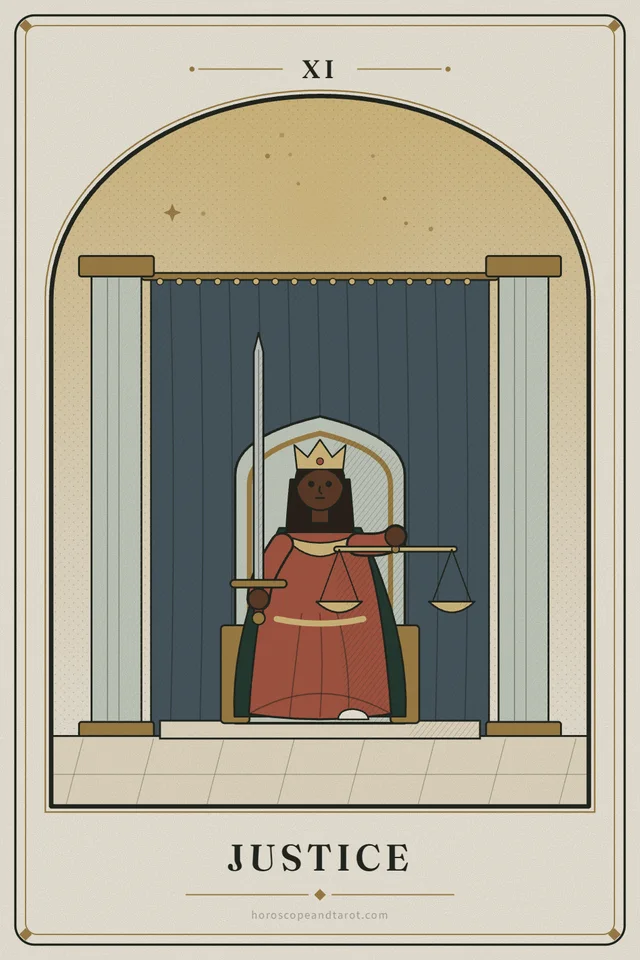
Major Arcana · 11 · Libra
Justice
- fairness
- truth
- accountability
- balance
- clarity
Clear thinking and fair dealing; the card of weighing things honestly and taking responsibility for your part.
Upright
Justice is the card of fairness and honest assessment. Traditionally it points to truth, cause and effect, accountability and decisions made with clear judgment. It is attributed to Libra, the sign of the scales, and it values balance over sympathy or speed.
In daily life, this card often shows up around decisions that need careful weighing: splitting chores fairly, responding to feedback, admitting a mistake, or making a choice where everyone's needs deserve a hearing. It asks for honesty, including with yourself. What actually happened? What is your share of it? What would a fair outcome look like if you weren't personally invested? Justice isn't about punishment. It's about seeing clearly and acting in a way you could explain to anyone. That kind of clarity tends to make the next step obvious.
Reversed
Our draws are upright-only by default; some readers use reversals as a quieter, inward or blocked version of the card.
Reversed, Justice points to imbalance or avoided accountability. You may feel something is unfair and not know how to say so, or you may be reluctant to own your part in a situation. Self-judgment can also run too harsh here. Separate the facts from the story you're telling about them, then address what you're actually able to address.
In a three-card spread
- What to notice
- Notice where a situation is out of balance, and where you may be contributing to it.
- What to release
- Release blame, including self-blame, that isn't grounded in the facts.
- What to practice
- Practice honest assessment and accountability, choosing what you can stand behind.
Symbolism
Justice traditionally sits between two pillars, holding an upright, double-edged sword in one hand and balanced scales in the other. She wears a crown and red robes, and unlike many courthouse statues she is usually not blindfolded, suggesting clear sight rather than impartial blindness. The sword stands for decisive reason and the scales for weighing evidence. Themes include equity, law, truth, and the consequences that follow from our choices.